


GRP as an alternative to steel
More and more companies in the industrial sector are re-evaluating their material choices, asking when to use which material or whether a combination of materials is the smarter solution. We have outlined the key differences for you and explain why GRP offers many advantages.
What is the difference between steel and GRP?
Steel and GRP (glass reinforced plastic) are both widely used construction materials, but they differ significantly in properties and applications. In demanding environments such as offshore installations, water management, and the food industry, GRP offers clear advantages. The key differences between steel and GRP are shown in the table below:
| Property | Steel | GRP |
| Weight | Heavy | Up to 70% lighter |
| Corrosion resistance | Prone to rust without coating | Fully corrosion resistant |
| Maintenance | Requires regular maintenance | Virtually maintenance-free |
| Service life | Depends on maintenance | 30 to 50 years |
| Workability | Requires specialist tools | Easy to cut and drill |
| Total cost of ownership | Higher in the long term | Lower in the long term |
In which environments does GRP perform best?
GRP (Glass Reinforced Plastic) performs exceptionally well in environments where moisture, salt, chemicals, or corrosion are a factor. In such conditions, GRP offers clear advantages over traditional materials like steel.
Water management and treatment
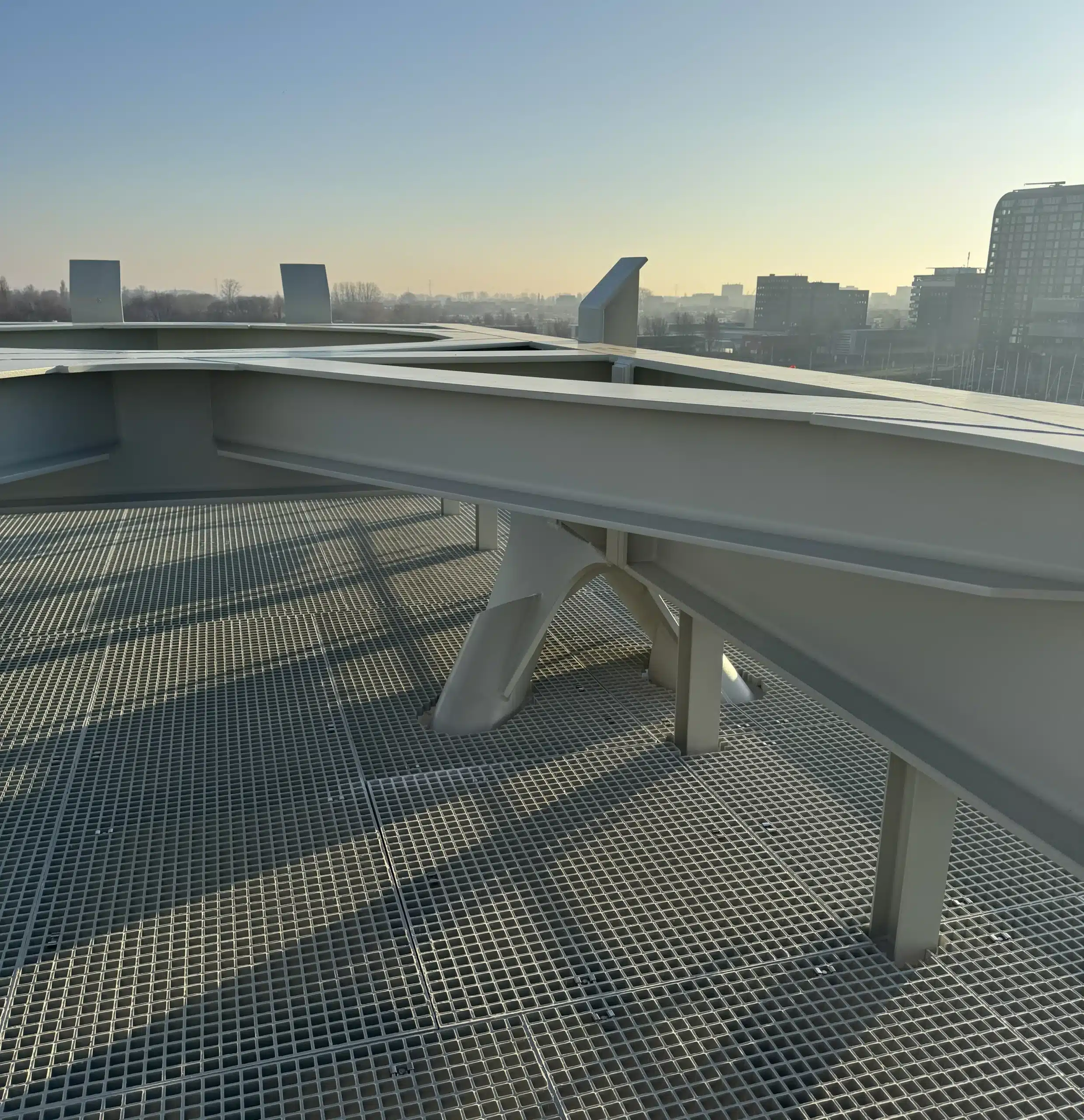
In water authorities, wastewater treatment plants, and pumping stations, steel is continuously exposed to humid conditions. GRP grating and platforms retain their properties without intensive maintenance, making them a durable solution.
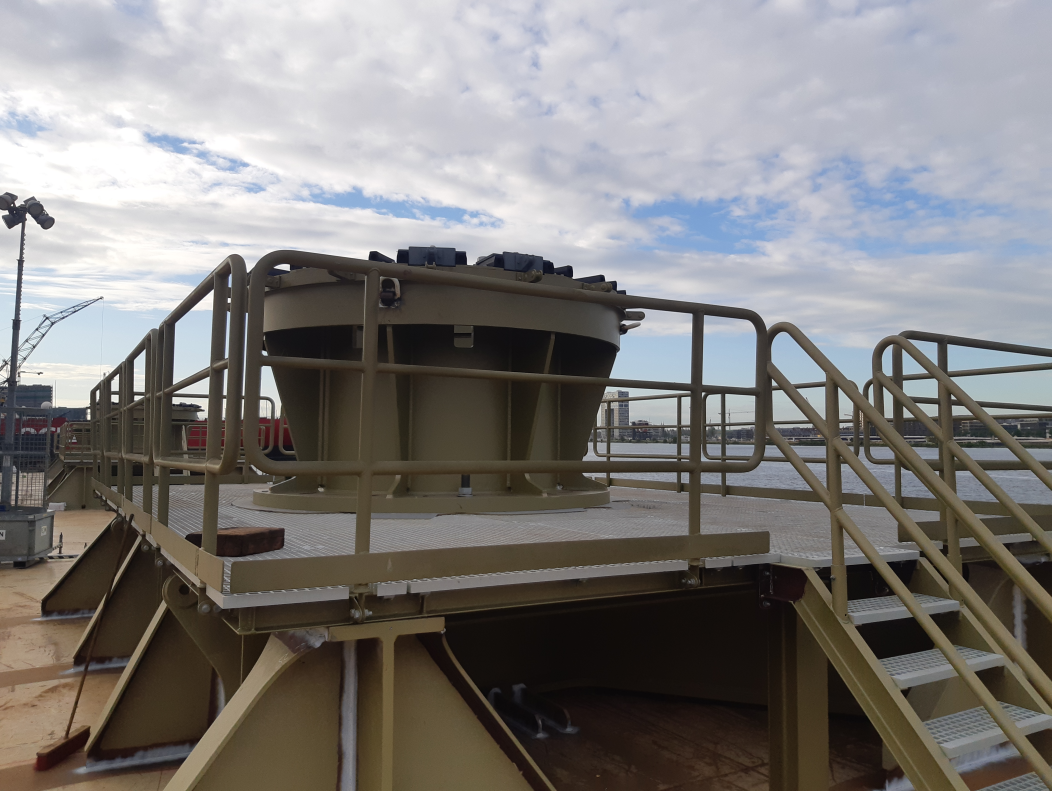
Saltwater is one of the most aggressive environments for steel. GRP walkways, cage ladders, and handrails are an excellent alternative: they do not rust, are lightweight, and are easy to install in locations where space and accessibility are limited.
Process industry and chemicals
In factories where acids, solvents, and cleaning agents are used, chemical resistance is essential. GRP is highly suitable in these environments. Typical applications include platforms around reactor vessels, walkways at dosing stations, and stairs in spray booths.
Food industry and marinas
GRP is easy to clean and resistant to the cleaning agents commonly used in the food industry. In marinas and other marine environments, the material does not rot and requires minimal maintenance.
Combining steel and GRP
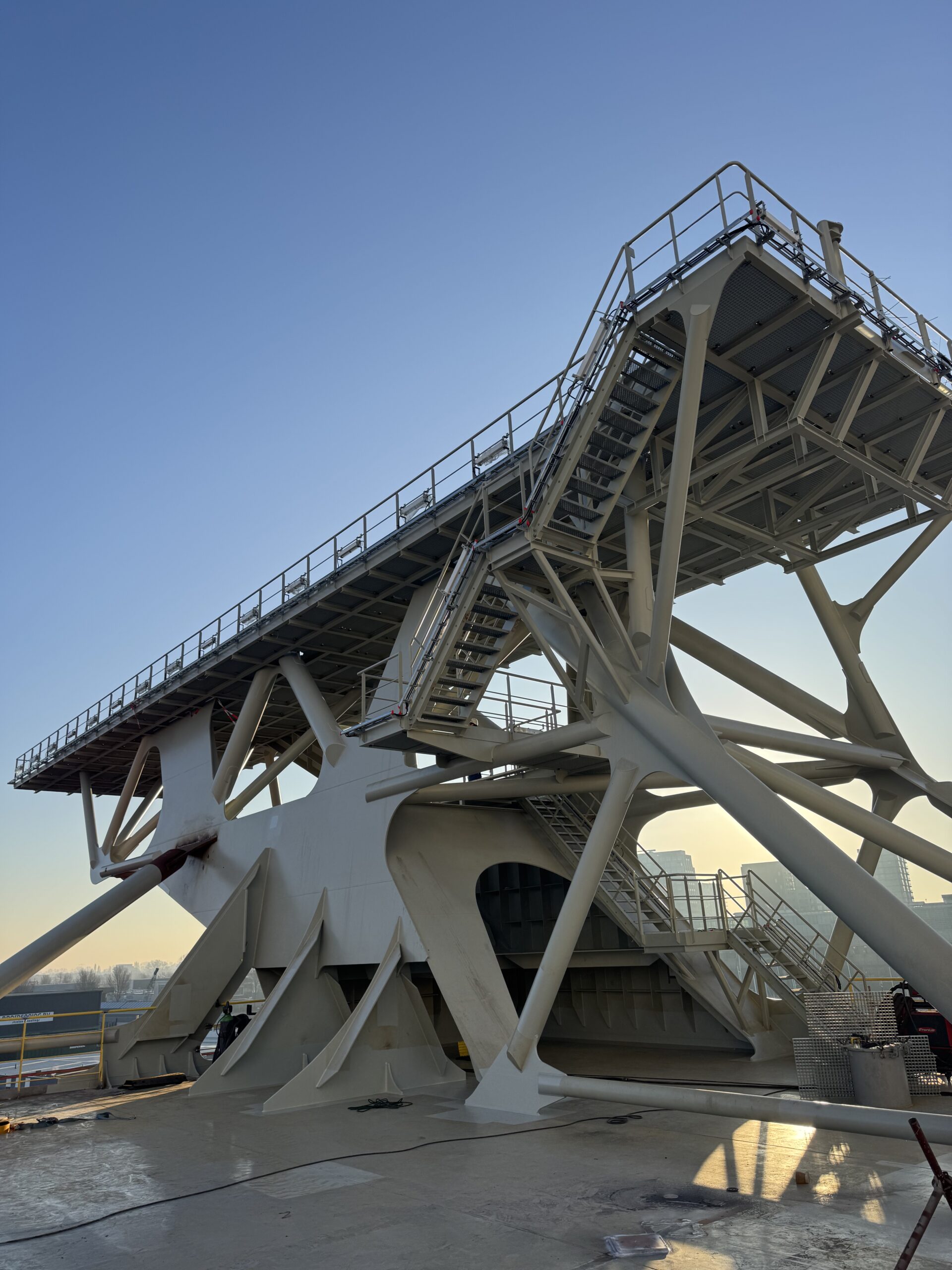
In practice, a combination of steel and GRP is often chosen. Steel forms the main load-bearing structure, while GRP is used for platforms, walkways, stairs, and handrails. This way, you benefit from the structural strength of steel as well as the low-maintenance advantages of GRP. This results in lower lifecycle costs and reduced maintenance time.